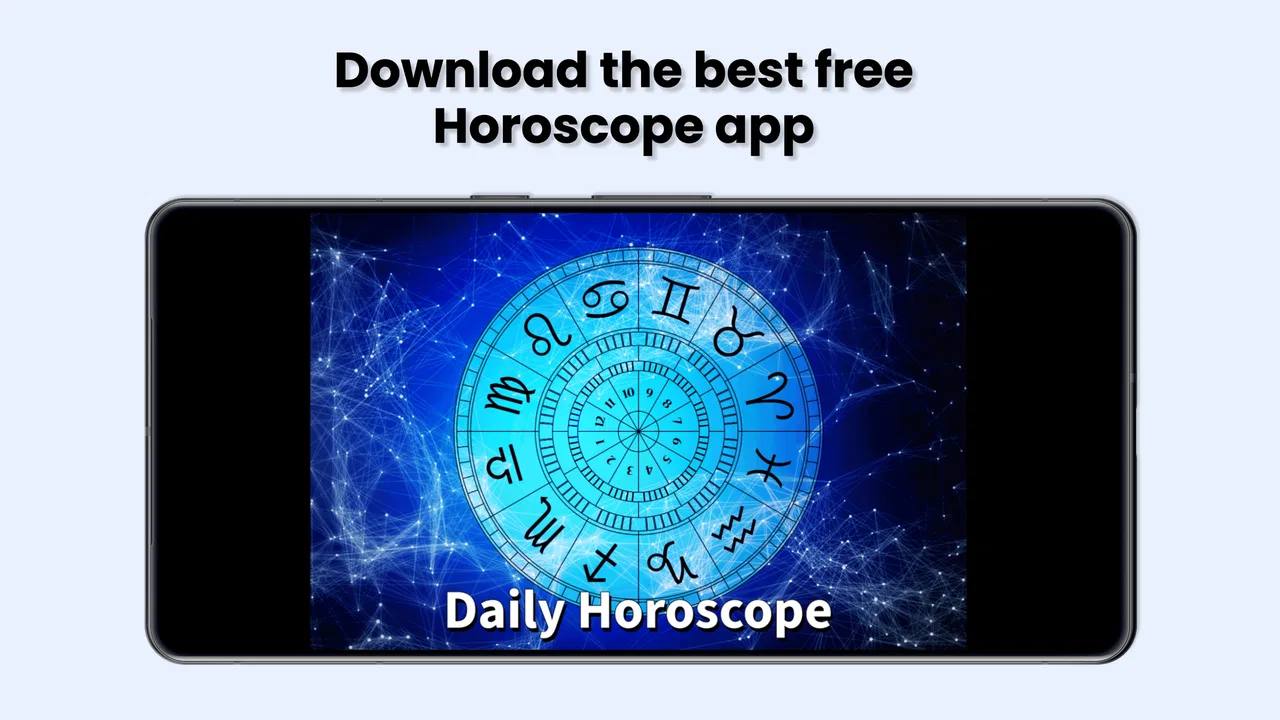
Daily Horoscope 2026
- 4.6
- Rating
- 500.00K
- Installs
- Free
- Price
 Analysis by App-foxy
I approached Daily Horoscope 2026 as a quick lifestyle companion rather than a serious astrology reference. Its main appeal is convenience: it brings a horoscope experience close to the phone habits many people already have, especially around calls. After using it, I found the app easiest to appreciate when I wanted a short, low-effort moment of reflection, not when I needed a detailed birth-chart analysis or a carefully sourced explanation of astrology.
The app is free to download and is aimed at Everyone, which makes it approachable for casual users. It comes from PDF, AI, Tools, Utilities, Useful Apps by Molibe and sits in the lifestyle category. Its current version is 2.0.13, and it requires Android 10 or later. That last point matters more than it may seem: anyone using an older phone will need a newer device or operating system before the app becomes an option.
Its public reception is encouraging, with a 4.6 average from around fifteen thousand ratings and more than one hundred thousand installs. I would not treat those figures as proof that it suits every person, but they do suggest that the basic idea is finding an audience. The more useful question is whether its presentation, timing, and interaction style work for your own needs.
You May Also Like

 Blood Strike: 2.5 Anniversary
Blood Strike’s Loadouts Turn Every Drop Into a Tactical Gamble
A close look at Blood Strike’s custom loadouts: how fast access to signature weapons reshapes its battle royale rhythm, rewards preparation, and narrows the gap between fights.

 Pandora - Music & Podcasts
Pandora’s Music Is Easy to Start, but Harder to Recover
Pandora’s strength is its low-effort path from a seed to a station. Its weak spot is how much confidence it asks you to place in connection, setup, and quiet recovery.

 8 Ball Pool
 Is Built on Rivalries, Rematches, and Routine
A close look at the rivalries, rematches, shared routines, and unanswered safety questions that turn a quick pool match into a persistent mobile community.

 Samsung Music
’s Quiet Strength Is Playing What You Already Own
Its reach comes less from spectacle than from dependable access to a personal library. That simplicity is both the app’s strongest retention engine and its ceiling.

 AccuWeather: Weather Radar
AccuWeather Review: A Quick, Clear Forecast for Everyday Decisions
For everyday plans, the best forecast is the one you can understand quickly. AccuWeather makes rain timing, radar, and local conditions easy to act on, with a few trade-offs.

 Hill Climb Racing
Why Hill Climb Racing Still Turns Crashes Into One More Run
A tiny car, a bumpy hill and one more upgrade: Hill Climb Racing keeps resurfacing because its simple chaos makes every near-miss feel personal.
More From Our News Desk



How the app feels to read and navigate
I found that the reading experience is easiest to judge as a small, focused pause rather than a place to explore astrology in depth. In this section, I’ll look at how that concise approach can fit into ordinary phone use and where it may feel limiting, especially if you prefer more context or a different way of taking in written content.
A short-form experience that favors quick attention
The strongest part of the experience is its simplicity. A daily horoscope is normally something people read between other tasks, and this app is built around that kind of limited attention. I did not feel that I needed to study a complicated menu or learn a new system before reaching the main content. That makes it suitable for someone who wants a gentle daily check-in rather than a deep dive.
For readers who find long blocks of text tiring, a short horoscope format can be more comfortable than a traditional astrology website filled with menus, charts, advertisements, and unrelated articles. The app’s focused purpose also helps people who prefer one clear activity at a time. I could open it with a specific intention, read, and leave without sorting through a large content library.
That same focus creates a trade-off. A compact daily reading may be easier to process, but it can also feel too brief for users who want context, explanations, or a record of how interpretations change over time. If you enjoy comparing different astrological systems, exploring planetary positions, or entering extensive personal information, this is probably not the right tool. A dedicated birth-chart service will usually offer a broader experience.
Practical reading habits for different users
I found it helpful to treat the horoscope as a prompt rather than an instruction. Reading it at the start of the day can provide a small pause before work, school, or errands. Reading it later can work just as well if you prefer to compare the message with what actually happened. This approach is especially useful for people who enjoy journaling or mindful reflection but do not want a separate meditation app.
For users with dyslexia, attention difficulties, or limited reading stamina, the best approach is to take one idea at a time instead of trying to absorb the entire message immediately. If a passage feels dense, I would read it once for the general meaning and then return only to the sentence that feels relevant. The app does not need to become a test of concentration; its value is in making a small moment available.
People with low vision should judge the actual text presentation on their own device before relying on it every day. Android’s own display-size and magnification tools may help, but the result depends on the phone, system settings, and the way the app renders its screens. I would not assume that every visual element will respond equally well to enlargement. Anyone who needs dependable large-text behavior should test the reading flow before paying for anything inside the app.
Navigation without unnecessary commitment
One useful quality is that the app can fit into a routine without demanding a large time investment. That makes it less intimidating for older users or anyone who avoids apps that feel overloaded. A family member who is comfortable with basic phone use but dislikes complex dashboards may find a daily horoscope more approachable than a full astrology platform.
Still, simple does not always mean universally clear. Astrology vocabulary can be unfamiliar, and a user who does not already understand signs may need to interpret the wording without much guidance. I would have preferred a more explicit path for newcomers explaining what information matters and how to read the result. If you are introducing it to someone else, spend a few minutes showing the basic flow instead of assuming that the symbolism will be obvious.
The app is also best suited to people who are comfortable with a phone-centered routine. Someone who prefers printed calendars, spoken information, or a completely offline journal may find the digital format less natural. In that case, the most accessible alternative may be to use the app as a brief source of inspiration and then copy the useful part into a notebook.
Motor and sensory considerations
From a motor-access perspective, a horoscope app has a relatively low interaction burden compared with games or creative tools. The user is mainly reading and moving through a small amount of content, rather than performing rapid gestures or precise actions. That makes it potentially comfortable for people with limited dexterity, hand tremors, or fatigue, provided the phone’s controls and the app’s touch targets are manageable for them.
There is an important distinction between low interaction and no interaction. Opening the app, selecting content, scrolling, and returning to another task still require touch control. Someone who has difficulty with repeated tapping may prefer to use Android’s built-in accessibility features, voice control, or an alternative reading method where available on their device. I would not choose this app solely because it appears simple; I would test whether the core actions are comfortable with one hand and at the user’s normal pace.
For users sensitive to motion, bright colors, or visual stimulation, a calm reading experience is generally preferable to an animated entertainment app. Even so, individual sensitivity varies, and a person who is easily distracted may benefit from opening the app in a quiet environment with other notifications silenced. The practical accessibility improvement may come less from the horoscope itself and more from controlling the phone around it.
People who are hard of hearing are unlikely to need audio to understand a written horoscope, which is an advantage if the experience is primarily text-based. On the other hand, users who depend on spoken output should check how their screen reader handles the app’s text order, headings, and controls. I cannot treat general Android compatibility as a guarantee of a polished screen-reader experience. A short personal test is the sensible way to decide.
A realistic everyday scenario
Imagine someone commuting to work with ten quiet minutes before the day becomes busy. They open the app, read the daily message, and choose one practical thought to carry into a meeting. Perhaps the horoscope encourages patience, and that becomes a reminder to listen before responding. The value is not that the app predicts the meeting with certainty; it is that the reading creates a small mental reset.
That scenario also shows where the app can support different abilities. A person who cannot comfortably manage a long planning routine may still be able to read one short passage. Someone with stress-related concentration problems may use it as a predictable ritual. A user who is visually fatigued can enlarge the phone’s display, read slowly, and stop after the central idea rather than navigating through a large information system.
However, the same situation can become inconvenient if the person is in a noisy environment, has limited mobile access, or needs content delivered through a specific assistive format. The app may be easy to open, but situational access depends on the phone, surroundings, and personal setup. I see it as a flexible small habit, not a universal solution for every context.
How it compares with usual alternatives
The most obvious alternative is a horoscope website. Websites can offer more articles and may be easier to open from different devices, but they often surround the reading with navigation, advertising, and competing links. This app feels more focused for someone who wants a dedicated daily moment on Android. If you dislike installing separate apps for simple content, a website may still be more convenient.
Another alternative is a general astrology app with birth charts, compatibility reports, lunar information, and long explanations. Those services are better for users who want to study astrology in depth. Daily Horoscope 2026 is more appealing when the goal is a quick reading with less setup. I would choose the broader service for analysis and this app for routine.
A paper horoscope column or a personal journal offers a different kind of accessibility. Paper avoids screen glare, battery concerns, and touch interaction, while a journal lets you build your own record and reflect without relying on an app’s wording. The digital option wins on immediacy, but not necessarily on comfort. For someone with visual or motor needs that make phone use tiring, writing down a brief daily prompt may be the better long-term choice.
Useful ways to make the experience more inclusive
My first practical tip is to adjust the phone before judging the app. Try the system’s text-size, display-size, contrast, and magnification controls one at a time. If the reading becomes easier but buttons or surrounding elements become awkward, return to the smallest change that improves comfort. This is more useful than assuming a single setting will solve every problem.
My second tip is to build a low-pressure routine. Instead of opening the app repeatedly, choose one predictable time and keep the reading short. This helps users with attention regulation because the app becomes a bounded activity rather than another stream of notifications. It also reduces the temptation to treat every message as an urgent decision.
My third tip is to pair the horoscope with a concrete action that does not depend on belief. After reading, write one sentence such as “I will pause before replying” or “I will leave space for rest.” This turns vague inspiration into something practical and makes the app more useful for people who enjoy reflective prompts but remain skeptical about prediction.
A fourth consideration is shared use. If you are helping an older relative or a person who is new to astrology, demonstrate the app once and explain the meaning in ordinary language. Avoid presenting the text as medical, financial, or professional advice. The app works best as entertainment and personal reflection, especially for users who may take confident-sounding statements literally.
Where the experience still has barriers
The biggest limitation is the narrowness of the format. A daily horoscope can be pleasant, but it does not replace a planner, therapist, accessibility tool, or specialist astrology reference. Users looking for evidence-based guidance should not use it as a decision-making authority. That boundary is particularly important for people who are anxious or vulnerable to predictive language.
There is also a financial boundary. The app is free, but optional in-app purchases range from $4.49 to $15.99 per item. That does not make the free experience unusable, but it means I would pay attention to what is included before committing to an upgrade. For an accessibility-minded user, the key question is whether a paid item changes convenience or merely adds extra content. I would not assume that paying will resolve reading, navigation, or assistive-technology issues.
The Android requirement is another practical filter. The app supports Android 10 and later, so people using older phones may be excluded even if the app’s content would otherwise suit them. Upgrading a device just for a horoscope would not make sense to me. A browser-based option, a printed source, or a simple journal is more reasonable in that situation.
Users who need consistent spoken navigation, reliable keyboard control, or carefully structured text should test the complete journey rather than only the opening screen. Accessibility is not just about whether an app launches. It includes finding the reading, understanding its structure, changing settings, and leaving without confusion. Daily Horoscope 2026 may be comfortable for many casual readers, but I would not describe it as a substitute for a purpose-built accessible reading service.
Who should use it and who should skip it
I would recommend trying it if you enjoy astrology as a daily ritual, prefer short content, and want something more focused than a busy horoscope website. It can also suit people who like reflective prompts, need a small pause during the day, or want a lightweight lifestyle app rather than a complex personal-analysis platform.
I would skip it if you want detailed natal-chart work, scientific guidance, extensive customization, or a tool designed specifically around assistive technology. I would also avoid relying on it for important choices. A horoscope can provide a moment of perspective, but it should not replace professional advice or your own judgment.
For families and mixed-ability households, the decision is more personal. One person may find the brief reading easy and enjoyable, while another may struggle with text size, touch controls, or unfamiliar terms. The Everyone age rating makes the app broadly approachable, but it does not tell me how comfortable every individual will be. A short trial on the intended phone is more informative than the label alone.
My inclusive verdict
After looking at it through the lens of readability, motor effort, sensory comfort, and real-world context, I see Daily Horoscope 2026 as a modest but approachable lifestyle app. Its strength is not depth; it is the ability to turn a familiar horoscope habit into a quick phone-based pause. The focused format can work well for casual readers and for people who find large, crowded astrology services overwhelming.
Its limitations are equally clear. The experience may not satisfy users who need detailed astrology, robust customization, or guaranteed compatibility with a particular assistive setup. The Android requirement and optional purchases are also worth considering before making it part of a routine. I would test the free experience with the phone settings I actually use, rather than judging it from the app’s general simplicity.
Overall, I think it is worth trying for someone who wants a free, low-commitment daily reading and understands that the result is a reflective prompt, not a dependable forecast. The app’s 4.6 average and audience of over one hundred thousand installs make it an easy candidate to explore, but personal comfort matters more than popularity. My recommendation is to use it as a small, accessible-enough moment of reflection, while choosing a different option when depth, certainty, or specialized access support matters more.
FAQs for Daily Horoscope 2026
01What features does Daily Horoscope 2026 offer?
Daily Horoscope 2026 provides personalized daily, weekly, and monthly horoscopes for all zodiac signs. It includes detailed insights into love, career, and health. Users can enjoy compatibility reports, astrological forecasts, and even daily astrology tips. The app also provides a user-friendly interface with customizable notifications.
02Is Daily Horoscope 2026 free to use, or are there in-app purchases?
Daily Horoscope 2026 is free to download and offers basic horoscope readings at no cost. However, it includes in-app purchases for premium features such as detailed compatibility analysis, ad-free experience, and personalized astrological reports. Users can choose subscriptions for additional content and features.
03How accurate are the horoscope predictions in Daily Horoscope 2026?
The predictions in Daily Horoscope 2026 are crafted by experienced astrologers who use traditional and modern methods. While astrology can offer guidance and insights, it should be considered as entertainment and inspiration rather than absolute predictions. Users should use their judgment for decisions based on these readings.
04Can I customize notifications in Daily Horoscope 2026?
Yes, Daily Horoscope 2026 allows users to customize notifications according to their preferences. Users can set reminders for daily horoscope readings or receive alerts for specific astrological events. This feature ensures that users stay updated with minimal disruption to their daily routine.
05Is my personal data safe with Daily Horoscope 2026?
Daily Horoscope 2026 prioritizes user privacy and data security. The app complies with industry standards to protect personal information. Users can review the app’s privacy policy for details on data collection and usage. It is important to download the app from trusted sources to ensure security.
Pros
- User-friendly and intuitive interface.
- Offers daily personalized horoscope updates.
- Includes detailed astrological insights.
- Supports multiple zodiac signs.
- No registration required for access.
Cons
- Contains frequent in-app advertisements.
- Limited features without premium subscription.
- Occasional glitches in notification system.
- Requires internet for content updates.
- Lacks detailed compatibility analysis.

Daily Horoscope 2026
Gallery